Slider

ANALYSIS OF TECHNOLOGIES ANALYSIS OF WEAPONS ANALYSIS OF FLEETS ANALYSIS OF NAVAL BALANCE ANALYSIS OF WARSHIPS OF THE PAST ANALYSIS OF AIRCRAFT CARRIERS ANALYSIS OF SURFACE COMBATANTS ANALYSIS OF SUBMARINES AND MINI-SUBS ANALYSIS OF AMPHIBIOUS WARFARE SHIPS ANALYSIS OF COAST GUARD VESSELS NAVAL NEWS, BOOK REVIEWS, PHOTOS AND MORE!

Menu

Translate in your language!

Showing posts with label Fleets. Show all posts

Sunday, 1 October 2023

FLEETS #33: Voksmarine, Bundesmarine, Royal Netherlands Navy and Turkish Navy in Cold War

The following images illustrate the most important classes of warships that were in service with the navies of East Germany, West Germany, the Netherlands and Turkey during the Cold War. All the images are created by www.naval-encyclopedia.com. In that page you can read some excellent naval history articles, to download other graphs or you can purchase the same graphs in high resolution in the online shop! More posts will follow for your collection of current naval fleets but also of fleets from the past.
 
East German Navy (Volksmarine) in Cold War

East German Navy (Volksmarine) in Cold War

Read More ->>

Thursday, 1 December 2022

FLEETS #32: The French Navy, the Free French Naval Forces and French Naval Projects in WWII

The following image illustrate all warships that were in service with the French Navy, the French Naval Forces and the naval projects that were planned to materialize the period the WWII lasted. Free France (French: France Libre) was a political entity that claimed to be the legitimate government of France following the dissolution of the Third Republic. Led by French general Charles de Gaulle, Free France was established as a government-in-exile in London in June 1940 after the Fall of France during World War II and fought the Axis as an Allied nation with its Free French Forces (Forces françaises libres).

The image was created by www.naval-encyclopedia.com. In that page you can read some excellent naval history articles, to download other graphs or you can purchase the same graphs in high resolution in the online shop! More posts will follow for your collection of current naval fleets but also of fleets from the past.

The French Navy, the Free French Naval Forces and French Naval Projects in WWII

Read More ->>

Tuesday, 31 May 2022

FLEETS #31: The Argentine Navy in various periods

This is a collection of images created by various artists and analysts and depict the Argentine Navy fleets in various periods, from 1914 to 2018. Enjoy!

The Argentine Navy in 1933

Read More ->>

Saturday, 30 April 2022

FLEETS #30: The Royal Canadian Navy, vessels in service and in development

HMCS Halifax departs to join Operation Reassurance.
The Royal Canadian Navy (RCN) is Canada’s naval force consisting of approximately 12,570 Regular Force and 4,111 Reserve sailors, supported by around 3,800 civilian employees. The mission of the Royal Canadian Navy is to generate combat-capable, multipurpose maritime forces that support Canada’s efforts to participate in security operations anywhere in the world, as part of an integrated Canadian Armed Forces. Τhe RCN Fleet is made up of numerous classes of ships, submarines and other vessels, as well as specialized units that allow Canada to maintain one of the most active blue-water navies in the world. Enjoy four excellent official RCN posters!

The following official Royal Canadian Navy poster depicts all the vessels in active service today, their armament and the vessels in development. For high resolution image click here.

The Royal Canadian Navy, vessels in service and in development. HR image here.

Read More ->>

Friday, 5 November 2021

FLEETS #29: THE HELLENIC NAVY FLEET TODAY - Ο ΣΤΟΛΟΣ ΤΟΥ ΠΟΛΕΜΙΚΟΥ ΝΑΥΤΙΚΟΥ ΣΗΜΕΡΑ (2021)

By D-Mitch

The following Fleet graph (that took me significant amount of time to make it!) depicts all the vessels of the Hellenic Navy in 2023 (UPDATED) excluding tugboats, passenger transfer ships, RIB, LCVP, floating cranes, SOC smaller than 16m in length and other minor vessels. All the figures are completely new! I tried my best to illustrate each different type. It is in Greek. An older version of the Greek Fleet in English you can find it here. Please respect my work and do not modify or alter my graph. Enjoy!

Το ακόλουθο γράφημα Στόλου (το οποίο μου πήρε αρκετό χρόνο να το δημιουργήσω!) απεικονίζει όλα τα σκάφη του Πολεμικού Ναυτικού το 2023 (ΑΝΑΝΕΩΜΕΝΟ) με εξαίρεση ρυμουλκά, πλοία μεταφοράς προσωπικού, βοηθητικά βάσης, πλωτούς γερανούς, φουσκωτά σκάφη, ακάτους, ΣΑΠ μικρότερα των 16μ σε μήκος και άλλα δευτερεύοντα σκάφη. Όλες οι φιγούρες είναι εντελώς νέες! Προσπάθησα να απεικονίσω τον κάθε τύπο ελληνικού πολεμικού όσο πλησιέστερα με την πραγματική του μορφή. Παρακαλώ σεβαστείτε τον κόπο μου και μην αλλοιώσετε ή τροποποιήσετε το γράφημα! 

HELLENIC NAVY FLEET TODAY - Ο ΣΤΟΛΟΣ ΤΟΥ ΠΟΛΕΜΙΚΟΥ ΝΑΥΤΙΚΟΥ ΣΗΜΕΡΑ (2023)


Read More ->>

Tuesday, 30 June 2020

FLEETS #28: Royal Swedish Navy, Royal Norwegian Navy, Argentine Navy and Royal Canadian Navy in WWII

The following images illustrate the most important classes of warships that were in service with the navies of Sweden, Norway, Canada and Argentina during the World War II. All the images are created by www.naval-encyclopedia.com. In that page you can read some excellent naval history articles, to download other graphs or you can purchase the same graphs in high resolution in the online shop! More posts will follow for your collection of current naval fleets but also of fleets from the past.

Royal Swedish Navy (Svenska marinen) in WWII

Click to enlarge and save the image to view the details - Royal Swedish Navy in WWII

Read More ->>

Thursday, 25 April 2019

INFOGRAPHICS #42: The United States Navy guided missile cruisers 1955 - 2019

Written by D-Mitch
The impressive USS Long Beach entering Sudic Bay, in 1987.
The infographic in this article depicts all the twelve (12) classes of guided-missile cruisers of the United States Navy. These 12 classes of 15 sub-types in total include 65 vessels of which nine (9) were nuclear-powered, from 1955 until today. The vessels CG-1 through 8 and CG-10 through 12 were World War II converted cruisers; specifically former Baltimore-class heavy cruisers (CAG-1, CAG-2, CG-11 and CG-12), Cleveland-class light cruisers (CLG-3, CG-4, CG-5, CG-6, CG-7, CLG-8) and Oregon-class heavy cruisers (CG-10). CAG-1 USS Boston and CAG-2 USS Canberra retained most of their original gun armament and were later returned to their gun cruiser designations CA-69 and CA-70. Before 30 June 1975, ships CG-16 USS Leahy through CGN-38 USS Virginia (thus including also the two 11,550-ton Californias) were designated DLG or DLGN (Destroyer Leader, Guided Missile (Nuclear powered)). They were redesignated cruisers in the 1975 ship reclassification. 

Read More ->>

Monday, 4 February 2019

INFOGRAPHICS #41: The United States Navy cruisers and destroyers in 2019

Written by D-Mitch

US Navy Arleigh Burke class destroyers and Ticonderoga class cruisers
In the following infographic, The United States Navy Cruisers & Destroyers in 2019, I depict all the cruisers and destroyers that will be in active service with the United States Navy by December 31, 2019. A similar graph (#1) titled The United States Navy Submarines in 2019, illustrates all the submarines that are in active service with the United States Navy in February 2, 2019. Currently, the United States Navy operates a massive amount of powerful guided missile large surface combatants,  92 in total (!), consisting of two 190-meter Zumwalt class destroyers (DDG) (which are actually 16,000ton cruisers) with one more vessel to join the fleet this year, 22 Ticonderoga class cruisers (CG) and 66 Arleigh Burke class destroyers with two more vessels to join the fleet this year. The Ticonderoga class cruisers are "double enders", and along with the Zumwalt class "destroyers", are the only surface combatants in the US fleet that can employ two large caliber guns simultaneously. Ticonderogas have received several upgrades including the removal of the AN/SPS-49 radar and the installation of the SPQ-9B radar on the first 11 vessels in the class. Currently, the US Navy has no frigates in the fleet. However, if the littoral combat ships of the Freedom and Independence classes will receive anti-ship and anti-aircraft missile weapons, they will be considered as light frigates. 
Read More ->>

Saturday, 26 January 2019

FLEETS #27: Royal Yugoslav Navy, Polish Navy, Royal Hellenic Navy and Finnish Navy in WWII

The following images illustrate the most important classes of warships that were in service with the navies of Yugoslavia, Greece, Poland and Finland during the World War II. All the images are created by www.naval-encyclopedia.com. In that page you can read some excellent naval history articles, to download other graphs or you can purchase the same graphs in high resolution in the online shop! More posts will follow for your collection of current naval fleets but also of fleets from the past.

Royal Yugoslav Navy (Jugoslavenska Ratna Mornarica, Југословенска Pатна Mорнарица) in WWII

Click to enlarge and save the image to view the details - Royal Yugoslav Navy in WWII
Read More ->>

Saturday, 12 January 2019

FLEETS #26: The Japan Maritime Self-Defense Force today

Written by D-Mitch  

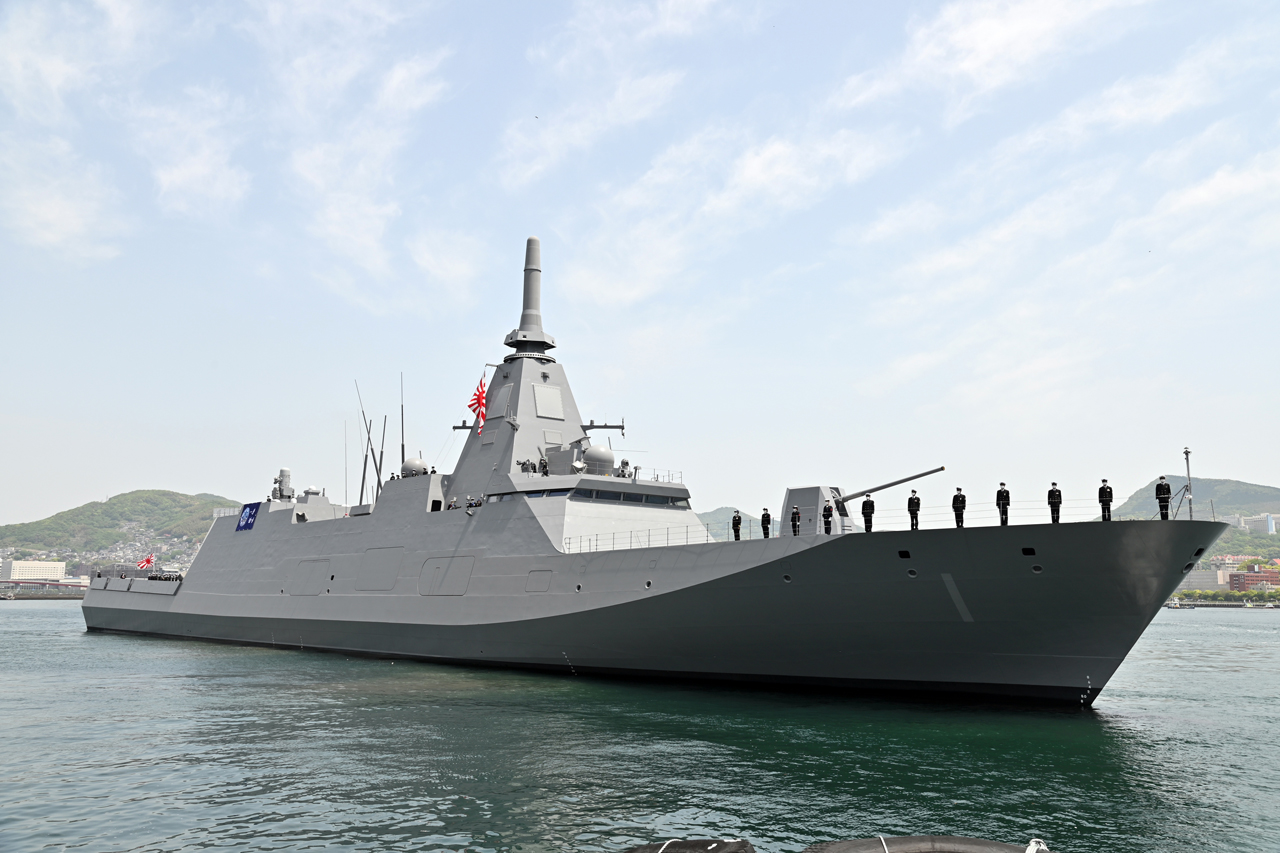
Maya-class destroyer (DDG); it entered service in 2020
Following Japan's defeat in World War II, the Imperial Japanese Navy was dissolved by the Potsdam Declaration acceptance. Japan's 1947 Constitution was drawn up after the conclusion of the war, Article 9 specifying that "The Japanese people forever renounce war as a sovereign right of the nation and the threat or use of force as a means of settling international disputes." The prevalent view in Japan is that this article allows for military forces to be kept for the purposes of self-defense. In 1954, the JMSDF was formally created as the naval branch of the Japan Self-Defense Forces (JSDF), following the passage of the 1954 Self-Defense Forces Law. The first ships in the JMSDF were former U.S. Navy destroyers, transferred to Japanese control in 1954. In 1956, the JMSDF received its first domestically produced destroyer since World War II, Harukaze. You can read more about The evolution of Japanese destroyers after WWII. This FLEETS post is devoted exclusively to the Japan Maritime Self-Defense Force today, one of the most powerful navies on the planet. The Japan Maritime Self-Defense Force (海上自衛隊 Kaijō Jieitai), JMSDF, also referred to as the Japanese Navy, is tasked with the naval defense of Japan. The JMSDF has a fleet of about 154 ships and 346 aircraft and consists of approximately 45,800 personnel. The first graph (G #1) includes all the carriers, submarines, destroyers, frigates, missile boats and naval aviation (ASW/SAR/MPA/ELINT) that will be in active service by February 2023 (UPDATED). The.. "offensive" force if I may say. Note that Japan is currently converting both 248-meter Izumo-class helicopter destroyers into real light aircraft carriers capable of operating the F-35B STOVL fighters! 
 
The lead ship of the new class of multi-mission stealth frigates
 
On August 31, 2022, the Japan Ministry of Defense announced that JMSDF will operate two massive 20,000-ton "Aegis system equipped ships" to replace the earlier plan of Aegis Ashore installations, commissioning one by the end of fiscal year 2027, and the other by the end of FY2028. According to the Defense Buildup Program that was published on December 16, 2022 the JMSDF will increase the number of Aegis-equipped guided-missile destroyers (DDG) from the current eight to ten, as well as two Aegis system-equipped vessels (ASEV) to be deployed in ballistic missile defense (BMD) operations. Therefore by the end of the decade, the JMSDF will operate 12 ships equipped with Aegis Weapon System (AWS) and likewise plans to replace its fleet of older, less capable destroyers and destroyer escorts with Mogami-class frigates.

Read More ->>

Friday, 28 December 2018

FLEETS #25: Algerian National Navy, Latvian Naval Forces and Estonian Navy today

Written by D-Mitch

This is the seventh article about various countries' navies today. In these articles, I briefly describe a country's naval fleet by reporting the ships in each type/category of warships and by providing a nice image where all the types of warships are illustrated and the units of its class are reported. I include the vessels that will enter in service this year and I have excluded those that are about to be decommissioned. I deliberately excluded many classes of auxiliary ships; those that they have "0" defence capacity and those that have secondary roles such as hydrographic survey ships, tugs, depollution vessels and training ships.
Read More ->>

Monday, 17 December 2018

FLEETS #24: Republic of Singapore Navy, Royal New Zealand Navy and Lithuanian Naval Force today

Written by D-Mitch

This is the sixth article about various countries' navies today. In these articles, I briefly describe a country's naval fleet by reporting the ships in each type/category of warships and by providing a nice image where all the types of warships are illustrated and the units of its class are reported. I include the vessels that will enter in service this year and I have excluded those that are about to be decommissioned. I deliberately excluded many classes of auxiliary ships; those that they have "0" defence capacity and those that have secondary roles such as hydrographic survey ships, tugs, depollution vessels and training ships.


Read More ->>

Sunday, 11 November 2018

FLEETS #23: The Royal Canadian Navy of the future

Type 26 frigate for Canada
Harry DeWolf class OPV
The Royal Canadian Navy of the future graph illustrates the main surface fleet and submarines of the Navy by the early-2040s (tankers, auxiliary vessels, etc. are not included). There are currently two major projects underway that will see upgrades to Royal Canadian Navy (RCN) capabilities. There will be, as of November 2018, up to twenty-one RCN ships under construction: up to fifteen Type 26 frigates and six Harry De Wolf-class ocean-going patrol vessels (OPV). There is no announcement yet about a Victoria-class replacement project (Naval Group Shortfin Barracuda is illustrated in the graph).
The Royal Canadian Navy of the future. High resolution image here.
Read More ->>

FLEETS #22: The Royal Navy of the future

Dreadnought class nuclear submarine
Type 26 frigate
The Royal Navy of the future graph illustrates the main surface fleet and submarines of the Navy by the early-2040s (landing ships, tankers, auxiliary vessels, etc. are not included). There are currently several major projects underway that will see upgrades to Royal Navy (RN) capabilities. There are, as of August 2018, thirteen RN ships and submarines under construction: four Astute-class nuclear-powered submarines (boats 4-7), one Dreadnought-class ballistic missile submarine (boat 1 of 4), one Queen Elizabeth-class aircraft carrier (ship 2 of 2), one City class (Type 26) frigate (ships 3 of 8) and four River-class Batch II ocean-going patrol vessels (ships 2-5). Early design and preparation work has begun on a fleet of at least five general-purpose frigates known as the Type 31

The Royal Navy of the future. High resolution image here.
Read More ->>

Saturday, 10 November 2018

FLEETS #21: The Royal Australian Navy of the future

Shortfin Barracuda
Hunter class FFG
The Royal Australian Navy of the future graph illustrates the main surface fleet and submarines of the Navy by the mid-2040s. There are currently several major projects underway that will see upgrades to Royal Australian Navy (RAN)  capabilities. The major projects for the RAN are the following:

  • Project SEA 1180 Phase 1 will replace the Armidale-class patrol boats with twelve (12) new Offshore Patrol Vessels to be constructed by Lürssen. Construction will commence in Q4 2018, with the first vessel to enter service in Q4 2021. The
  • Project SEA 4000 Phase 3, under which the RAN will acquire three (3) Hobart-class air warfare destroyers, built around the United States Navy Aegis air and surface combat management system. The vessels are based on the Spanish Álvaro de Bazán-class frigate. As of November 2018, two are in active service and one is currently under construction. It is more likely that by the mid-2040s the first vessels in the class will have been already retired.
  • Project SEA 5000 Phase 1, where nine (9) Hunter-class frigates to replace the Anzac-class frigates. The vessels will be built in Adelaide by BAE Systems and will be a variation of the Type 26 Global Combat Ship to be operated by the Royal Navy. The last ship in the class will have entered service by 2042.
  • Project SEA 1000, where twelve (12) Future Submarines will replace the Collins-class submarines. The future class is to be based on the Shortfin Barracuda proposal by French shipbuilder Naval Group. The class will enter service in the early 2030s with construction extending into the late 2040s.
The Royal Australian Navy of the future. High resolution image here.


Read More ->>

Friday, 19 October 2018

INFOGRAPHICS #39: The major surface combatants of the most powerful European Navies in 2035

Written by D-Mitch

European frigates, ESPS Blas de Lezo (F103), FGS Sachsen (F219)
and TCG Saligreis (F246), in close formation.

In this short article, similar to a complete analysis I did in the past on The major surface combatants of the most powerful European Navies in 2035, I illustrate the six most powerful surface combatant fleets in Europe by 2035 in a single graph, based on the shipbuilding programs that have announced and only. Russian Navy, as a naval superpower, is excluded from the graph. This time, the new graph, does not include only those countries that are located wholly or predominantly in Europe but also countries that exist partially within geographical Europe. Thus Turkish Navy is included as well. In this post, I will mention briefly some additions and changes regarding the previous article but I will not analyze more the developments and the designs, because I believe the before mentioned article covered the topic to a large extent.

Read More ->>

Monday, 7 May 2018

INFOGRAPHICS #33: The destroyers and frigates of the European Union in 2018

Written by D-Mitch

British and French destroyers in formation.
The following infographic depicts all The destroyers and frigates of the European Union in 2018, in a single image! Note though that the military forces of European Union are not integrated and thus there is not a single European Navy from the members of the European Union. However, in March 2017, the European Union approved a new military command center for foreign training missions after Britain dropped its opposition (which was the main obstacle), the latest step in EU efforts to integrate its military forces and defense industries.Therefore, the formation of a "EU Navy" is closer than ever. The EU major surface combatant fleet consists of 115 frigates and destroyers of which 29 are anti-aircraft warfare (AAW) warships and the rest 86 are general purpose (GP) and anti-submarine warfare (ASW) warships (SSBN)! There are 31 classes in commission (some of them are actually are variants of main classes such as the Karel Doorman or O.H. Perry). The major contributor to the EU naval fleet (till today at least) is the United Kingdom (UK) with 19 major surface combatants. France and Italy have just one less ship in their fleets, while Greece counts 13 ships with Spain and Germany 11 each. UK has six (6) AAW destroyers in commission, Spain five (5) and France and Italy four (4) each. Note that the Danish opt-out from EU defence cooperation and the UK will leave the EU on March 29, 2019. Moreover, countries such as Romania and Bulgaria have warships with limited armament; especially the two Type 22 frigates could be characterized as large offshore patrol vessels as they lack any missile system.

Read More ->>

Sunday, 6 May 2018

INFOGRAPHICS #32: The submarines of the European Union in 2018

Written by D-Mitch 

Greek HS Poseidon (Type 209), Portuguese NRP Tridente (Type 214)
and German U33 (Type 212) submarines during the
Exercise
NOBLE JUSTIFICATION 2014
This is another article about submarines. This time, I depict all The submarines of the European Union in 2018, in a single image! After the recent graphics, where all the submarine classes of China, United States of America and Russia are illustrated in single images, I thought it was a good idea to present the whole (honestly impressive) undersea fleet of the European Union. Note though that the military forces of European Union are not integrated and thus there is not a single European Navy from the members of the European Union. However, in March 2017, the European Union approved a new military command center for foreign training missions after Britain dropped its opposition (which was the main obstacle), the latest step in EU efforts to integrate its military forces and defense industries.Therefore, the formation of a "EU Navy" is closer than ever. The EU submarine fleet consists of 65 boats of which eight (8) are nuclear-powered ballistic missile submarines (SSBN), 13 nuclear-powered attack submarines, 44 diesel-electric submarines (SSK) of which SSK the 22 are equipped with air-independent propulsion system (AIP). There 21 classes in commission (some of them are actually are variants of basic submarine types such as Type 214 and Type 212). Only two countries, United Kingdom (UK) and France operate nuclear-powered submarines while there are five countries that operate submarines equipped with Air-Independent Propulsion (AIP). The UK has by far the largest submarines among all the European countries with its Vanguard class SSBN being 150 meters in length and displacing less than 16,000 tons. Romania actually has no submarine as its sole submarine, Delfinul, has been inactive since 1995. The two countries with the most numerous submarine fleets in their Navy, are the UK and Greece (each has 11 boats in commission) however the former has all its submarines nuclear-powered. The UK will leave the EU on March 29, 2019.

Read More ->>

Sunday, 22 April 2018

INFOGRAPHICS #31: The People's Liberation Army Navy submarines today

Written by D-Mitch 

Jin class ballistic missile submarine of the PLA Navy
In the following infographic, The People's Liberation Army Navy (PLAN) submarines in 2018, I depict all the submarines that are currently in commission with the PLA Navy (as of April 1, 2018). Currently, the PLA Navy (PLAN; Chinese: 中国人民解放军海军), operates a large number of nuclear-powered and diesel electric submarines. The Chinese ballistic missile submarine (SSBN) fleet  consists of  at least five (5) Jin class (09IV/09IVA, from now on 094/04A) SSBN  vessels (other sources mention six boats already in the class) and one Xia class (Type 092) SSBN (other sources report also a sub-variant, the Type 092G, consisting of a pair of boats) and perhaps one boat of the third generation of Chinese SSBN, the lead ship of the Type 096 SSBN (NATO:Tang-class). Therefore the total number of boats is the minimum six boats and maximum ten boats! Moreover, China operates at least four or five variants of the Type 093 (Shang class) nuclear-powered attack submarines (SSN) according to the latest reports; the initial pair of Type 093 with the old sail, the Type 093A with the new sail, the Type 093B with the small narrow hump located behind the sail, the Type 093B1 with the wider and more smooth hump and the Type 093B2 with the even smoother hump and shorter in height. The last variant could be though the Type 095 class as it is rumored that China has put in service the third generation of Chinese SSNs; the first boat of the new Type 095 SSN, and possibly one more boat already has been commissioned. In service there are also three (3) Type 091 (Han class) SSN boats, the first generation of Chinese SSNs. Therefore the number of Chinese SSNs is at least 13-14 boats, if we assume at least a pair for each variant plus the old Type 091s, either just eight (8) boats if we assume there is only one boat for each variant except the Type 091s (which is unlikely to be the case), or the real number is even bigger with the Type 095s a completely new variant in addition to the existing five Type 093 variants!

Read More ->>

Wednesday, 18 April 2018

INFOGRAPHICS #30: The Russian Navy submarines today

Written by D-Mitch 

Dmitriy Donskoy, the last of the Typhoon class undersea giants...
In the following infographic, The Russian Navy submarines in 2019, I depict all the submarines that are currently in commission with the Russian Navy (as of May 1, 2019). Currently, the Russian Navy (Russian: Военно-морской Флот Российской Федерации (ВМФ России), lit. Military-Maritime Fleet of the Russian Federation) operates an impressive number of powerful nuclear-powered and diesel electric submarines,. The Russian ballistic missile submarine (SSBN) fleet  consists of  four (4) Borei class SSBN (the fourth vessel and lead ship of the fifth generation Borei II-class, Knyaz Vladimir, is scheduled to enter service this year), six (6) Delta IV class SSBN, one recently overhauled Delta III class SSBN (Ryazan) and the last (and upgraded) boat of the largest ever built submarine class, the Typhoon class Dmitriy Donskoy (TK-208). Moreover, Russia operates eight (8) Oscar II class guided missile submarines (SSGN), 11 Akula I/II/III class nuclear-powered attack submarines (SSN) plus one more boat (Nerpa) which has leased to India from 2012 for 10 years (Chakra), one Yasen class SSN while one more, K-561 Kazan, is about to be commissioned this year, two (2) Victor III class boats and four (4) Sierra I/II class boats. The active diesel electric submarine fleet consists of 24 boats, all of them except three boats of the Lada class (two to be delivered by the end of the year or the next one), belong to the Kilo/Improved Kilo class attack submarines. The Russian Navy maintains also a significant amount of special purpose submarines including two nuclear-powered modified Delta III/IV boats (they operate as motherships for mini submarines, for a combination of oceanographic research, search and rescue, and underwater intelligence-gathering) as well as the 90 (?) -meter Sarov and the nuclear-powered AS-12, known also as Losharik. It should be mentioned that many boats are still inactive or in modernization overhaul, so for some of them their status is unclear.

Read More ->>