Slider

ANALYSIS OF TECHNOLOGIES ANALYSIS OF WEAPONS ANALYSIS OF FLEETS ANALYSIS OF NAVAL BALANCE ANALYSIS OF WARSHIPS OF THE PAST ANALYSIS OF AIRCRAFT CARRIERS ANALYSIS OF SURFACE COMBATANTS ANALYSIS OF SUBMARINES AND MINI-SUBS ANALYSIS OF AMPHIBIOUS WARFARE SHIPS ANALYSIS OF COAST GUARD VESSELS NAVAL NEWS, BOOK REVIEWS, PHOTOS AND MORE!

Menu

Translate in your language!

Showing posts with label Strategy. Show all posts

Thursday, 11 April 2024

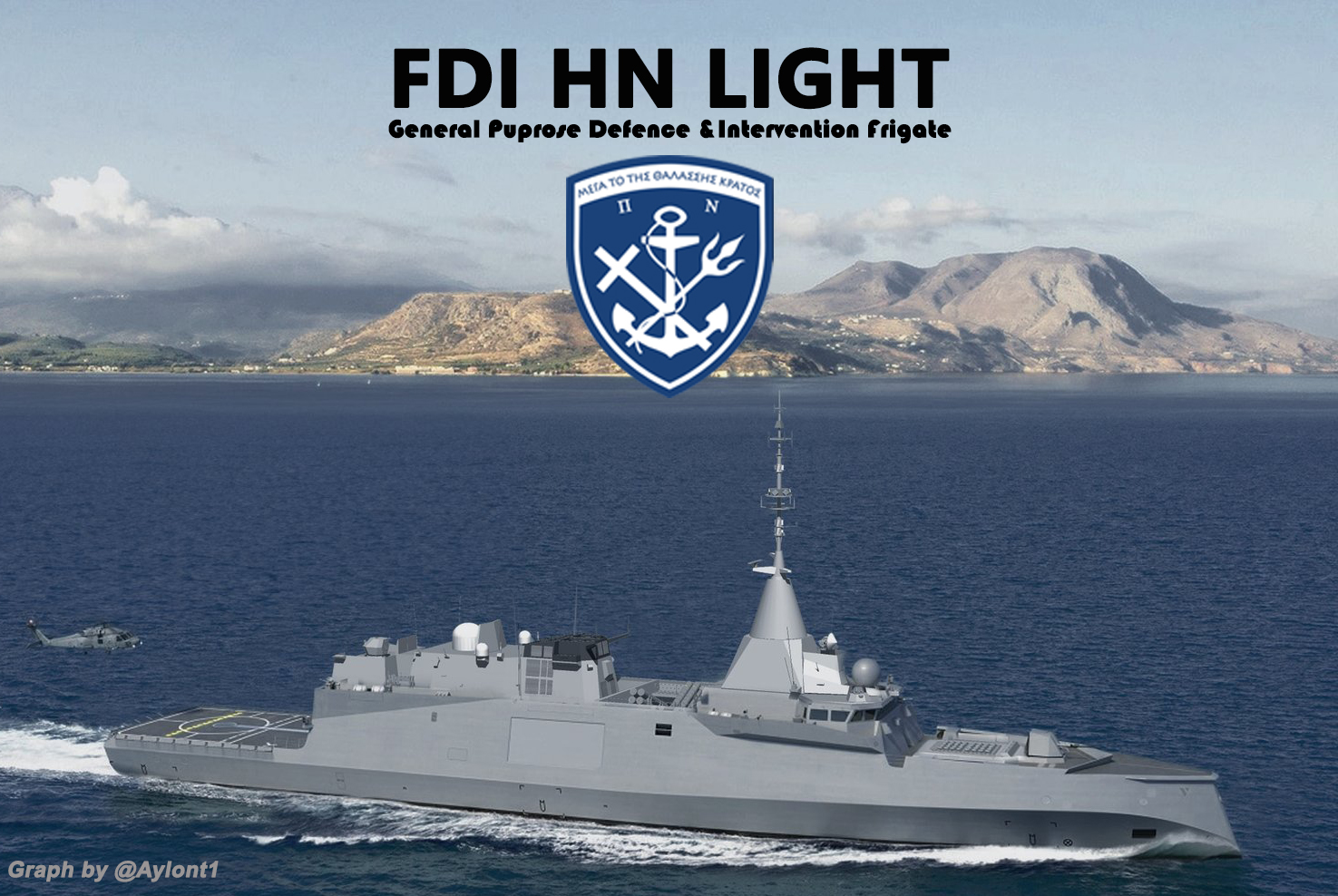
Frigate FDI HN LIGHT: a logical choice, for a powerful Greek Fleet!

Article by pro
Graphs by Aylont1

The FDI HN LIGHT concept. Graph by Aylont1
Following closely the efforts of the Hellenic Navy (HN) in recent years, after a period of inactivity due to the country's economic situation, we understand the difficulties this endeavor faces, with the main obstacle being cost. The author's perspective on resolving this challenging situation has remained consistent through social media channels. The main idea is that the Navy should focus on procuring surface units of adequate size, such as frigates, with equipment that meets the Navy's requirements as outlined in the informal competition of the corvette acquisition program. Moreover, this equipment should be offered by companies participating in the program. At the very least, it should be similar in quality. 

Thus, the Navy, with a larger-sized vessel instead of a corvette, can benefit from the relatively low cost of size increase. This is because the small value of the hull of the warship is mainly burdened by equipment, such as sensors, armament, and other equipment. Consequently, a larger vessel could offer all the advantages in terms of survival, operational range, autonomy, personnel comfort, and, of course, the development potential that a larger vessel offers.
Read More ->>

Tuesday, 31 January 2023

The future of the Hellenic Coast Guard Fleet (2020-2027)

The following article is in Greek language and analyzes the future purchases and the important issues regarding the future of the Hellenic Coast Guard ships and boats.

Από Ανώνυμος Λιμενικός και D-Mitch

Η "ναυαρχίδα" του ΛΣ-ΕΛΑΚΤ σήμερα, το ΠΑΘ Γαύδος
Στις 25 Νοεμβρίου 2022, το
Λιμενικό Σώμα – Ελληνική Ακτοφυλακή (Λ.Σ.-ΕΛ.ΑΚΤ.) εκτιμώντας τις παρούσες και μελλοντικές ανάγκες της χώρας ανακοίνωσε διαβούλευση με την αγορά για προμήθεια δύο (02)  Πλοίων Ανοιχτής Θαλάσσης (ΠΑΘ) ολικού μήκους άνω των 80 μέτρων. Πιο συγκεκριμένα, το Αρχηγείο του Λ.Σ.-ΕΛ.ΑΚΤ. ανακοίνωσε τη διενέργεια ανοικτών και δημόσιων ενημερωτικών συναντήσεων, μη δεσμευτικής συμμετοχής οικονομικών φορέων (διαβούλευση-τεχνικός διάλογος), με σκοπό την ενημέρωση του Λ.Σ. / ΕΛ. ΑΚΤ., «για τις νέες τεχνολογικές εξελίξεις και τη συλλογή πληροφοριών που κρίνονται ουσιώδεις στο πλαίσιο κατάρτισης τεχνικών απαιτήσεων/προδιαγραφών για την “Προμήθεια δυο (2) πλοίων ανοικτής θαλάσσης άνω των 80 μ.” συνολικού εκτιμώμενου προϋπολογισμού 160.000.000 ευρώ». Το πρόγραμμα συγχρηματοδοτείται από την Ευρωπαϊκή Ένωση (Ε.Ε.). Συνοπτικά, στις τεχνικές απαιτήσεις ζητείται η μέγιστη ταχύτητα των πλοίων να είναι 27 κόμβοι, θα δύναται αν φιλοξενήσει 40 άτομα πλήρωμα συν 30 επιβαίνοντες, θα διαθέτουν ελικοδρόμιο για την προσνήωση και εξυπηρέτηση ελικοπτέρου κατηγορίας 11 τόνων, καθώς επίσης και δύο μη επανδρωμένων ελικοπτέρων με μέγιστο βάρος απονήωσης 200 κιλών, υπόστεγο για τη φιλοξενία των μη επανδρωμένων ελικοπτέρων καθώς δυνατότητα φιλοξενίας και επανδρωμένου ελικοπτέρου της τάξεως των έξι τόνων και τέλος θα έχουν μόνιμο οπλισμό που θα αποτελείται από ένα τηλεχειριζόμενο πυροβόλο των 30 χλστ. και δύο τηλεχειριζόμενα πυροβόλα των 12,7 χλστ. (περισσότερες λεπτομέρειες εδώ). Είναι η πρώτη φορά στην ιστορία του Λ.Σ.-ΕΛ. ΑΚΤ. που συζητείται η προμήθεια πλοίων τέτοιου μεγέθους αφού μέχρι τώρα τα ΠΑΘ ήταν μικρότερα των 60 μέτρων.

Read More ->>

Sunday, 13 February 2022

Maintenance and repair of Hellenic Coast Guard ships and vessels today

The following article is in Greek language and analyzes the important issues regarding the maintenance and repair of Hellenic Coast Guard ships and vessels, today.
 
Από Ανώνυμος Λιμενικός

Το ΛΣ090 Γαύδος τύπου Damen Stan Patrol 5509
Με την από 26/01/2022 απόφαση κυρίου Υπουργού Ναυτιλίας και Νησιωτικής Πολιτικής (ΥΝΑΝΠ) (ΑΔΑ: ΨΠΕΖ 4653ΠΩ-ΣΤ1), απορρίφθηκε ως ΜΗ ΣΥΜΦΕΡΟΥΣΑ η προσφορά της εταιρίας "DAMEN SHIPYARDS GORINCHEM BV" για την Εν Συνεχεία Υποστήριξη (Follow On Support) του 58μετρου Πλοίου Ανοιχτής Θαλάσσης ΠΑΘ/ΛΣ - ΕΛΑΚΤ 090 «Γαύδος» τύπου Stan Patrol 5509. Η απόρριψη της πρότασης σημαίνει ότι το ΛΣ θα πρέπει να βρει εξειδικευμένα συνεργεία στην Ελλάδα για συντήρηση κι επισκευές στο 090 που κόστισε 30 εκατ € στα οποία προτεραιότητα δεν θα έχει ο πιο καλός , αλλά ο πιο φθηνός.
Με αφορμή αυτή την εξέλιξη, ως Λιμενικός, θα ήθελα να καταθέσω κάποιους προβληματισμούς μου όσο αφορά τη συντήρηση και την αποκατάσταση βλαβών των Περιπολικών Πλοίων και Σκαφών του ΛΣ - ΕΛΑΚΤ. 
 
Read More ->>

Wednesday, 18 September 2019

Hellenic Navy – Brief analysis of the current situation of the Fleet and its future

Written by D-Mitch
Photos by Nick Thodos 

The Hellenic Navy in exercise
Today, the Hellenic Navy maintains a large number of surface combatants and submarines in its inventory. However, the shortfalls suffered by the Navy over the last several years from the severe economic recession that began in mid-2008, are significant. Τhe economic crisis hit hard the country and Greece tried to recover via spending cuts including a high proportion of the defence budget. The vast majority of the warships in active service today are very old and should had been replaced by modern designs at least a decade ago. Having been held back by the pressures of the global economic crisis, the Hellenic Navy is now racing to catch up with its neighbors (source). Greece is a country with vast coastline, archipelagos and enclaves, heavily depended on trade and on the exploitation of maritime resource. However, trade and economic issues depend considerably on the free use of the sea, on the security of the sea lines of communication and the sustainable exploitation of marine resources. Greece is a maritime nation by tradition, as shipping is arguably the oldest form of occupation of the Greeks and has been a key element of Greek economic activity since ancient times. Today, shipping is the country's most important industry worth $21.9 billion in 2018. (source) The responsibility of the Hellenic Navy in this respect is certainly huge. To a large extent, the future of Greece depends on the control exercised on the sea. To continue being effective, the Fleet must be a powerful, balanced and flexible instrument at the service of Greece in this uncertain and ever-changing geostrategic environment. It is vital for the Navy to continue having the necessary means to solve the most complex and demanding situations and constantly protecting and surveilling the maritime domains of national interest. In this article the most important facts about the current situation of the Fleet and its (possible) future are reported. Finally, one graph depict the current fleet composition and its future composition by 2030 in two scenarios, optimistic (O) and pessimistic (P). A second graph depicts the years of active service of the newest and oldest vessel per warship type.
Read More ->>

Tuesday, 27 March 2018

A Kiel International Seapower Symposium experience!

Written by D-Mitch

Some days ago, I received an invitation to the Kiel International Seapower Symposium 2018 (KISS18), titled "Allied Maritime Strategy – A Theory for Success", the second of the Kiel Seapower Series international symposiums, which is organized by the Center for Maritime Strategy and Security, of the Institute for Security Policy, Kiel University (ISPK) with support from the Center for Naval Analyses (CNA), Arlington, Virginia, U.S.A. The invitation from the Head of the Center, Dr. Sebastian Bruns, brought me back good memories from the KISS'17, the first of the Kiel Seapower Series international symposiums, which I had the great privilege to attend.

The symposium venue at the historical Hotel Kieler Yacht Club
Read More ->>

Saturday, 26 August 2017

India’s Maritime Aspirations: Zone Defence and a Bubble

Written by Periklis Stampoulis *

India’s maritime “destiny” was early cited by K.M. Panikkar, an Indian diplomat and influential scholar: “The vital feature which differentiates the Indian Ocean from the Atlantic or the Pacific is the sub-continent of India, which juts out far into the sea for a thousand miles. It is the geographical position of India that changes the character of the Indian Ocean...”[1].

Talwar class frigates of the Indian Navy in formation
By fulfilling its “destiny”, India bumps into Chinese regional interests. Attempting to expand its own interests, commercial activities and energy goods imports, the “String of Pearls” project, namely the construction of a web of naval infrastructure (ports and bases) throughout the IOR, has been issued. These activities along with the arms sales to IOR states cause fears of Chinese encirclement [2]. Moreover, China has already built and fully operates a military base in Djibouti and according to a U.S. Pentagon report “most likely will seek to establish additional military bases in countries with which it has a longstanding friendly relationship and similar strategic interests [3]”. Already, a naval base/logistics infrastructure has been built in Gwadar, Pakistan, and certain ports in the IOR, such as Hambantota in Sri Lanka [4] and Chittagong along with Sonadia [5] in Bangladesh provide amenities to Chinese Navy ships. Therefore, the best way of countering Chinese descent to the IOR is a strong Indian Navy.

Read More ->>

Saturday, 29 July 2017

Egyptian Navy upgraded - Seeking for security or an indication of strategic aspirations?

Written by Theodore Bazinis*

''A navy is a state’s main instrument of maritime force. What it should do, what doctrine it holds, what ships it deploys, and how it fights are determined by practical political and military choices in relation to national needs. Choices are made according to the state’s goals, perceived threat, maritime opportunity…'' [1] (Baer, 1994)

Some of the most modern additions to the Egyptian Navy, Type 209/1400
submarine, Ezzat class missile boat and Aquitaine class frigate
Are the recent Egyptian naval procurements in coherence with the above mentioned words? On March 17, the first Gowind Corvette of the Egyptian navy successfully completed the first phase of sea trials and will soon be fully operational. Furthermore on April 19, the second Submarine Type 209/1400 was acquired. During the last five years the Egyptian Navy has materialized procurements which have upgraded its capabilities. What’s the ultimate purpose? Just seeking for Security, reflect of extensive strategic aspirations or political oriented decisions?

Read More ->>

Sunday, 21 May 2017

Malaysian 15 to 5 Armada Transformation Program - Meeting Mahan’s Perspectives while Adjusting to the Fiscal Environment

Written by Theodore Bazinis*

Alfred Thayer Mahan. Source
Royal Malaysian Navy vessels in formation
In his essay “Considerations Guiding the Dispositions of Navies’’, for the British journal National Review (1901), Mahan defined the ways that a nation should deploy and dispose its naval forces in times of peace. Τhe godfather of Sea Power, determined the constitution of the fleet, as a critical factor for naval power. Aiming to cope with a range of threats and challenges and fulfill its nation’s ambitions in maritime domain, a fleet should consist of adequate number of ships and of requisite types. Naval Strategists and Naval Policy Makers are charged to correspond in such a manner so that to achieve an ideal connection between naval procurements (which define the future constitution of the fleet) and ambitions, threats and challenges within a given fiscal context. Mahan determined four elements (abilities) which constitute a balanced fleet: (1) projection of sea power and overcoming a contingent or future enemy, (2) protection of vital sea lanes, (3) scouting and operating toward the coast and (4) exercise naval diplomacy.

Read More ->>